
Common Roof Coverings in South Florida: A Quick Guide
If you've ever had a roof inspection done on your home, you've probably heard a handful of terms tossed around — metal panel, barrel tile, architectural shingles, modified bitumen. Each of these materials behaves differently in our climate, ages differently, and matters differently when it comes to insurance and wind mitigation. Here's a quick rundown of the most common roof coverings we see on South Florida homes.
Metal Roofing
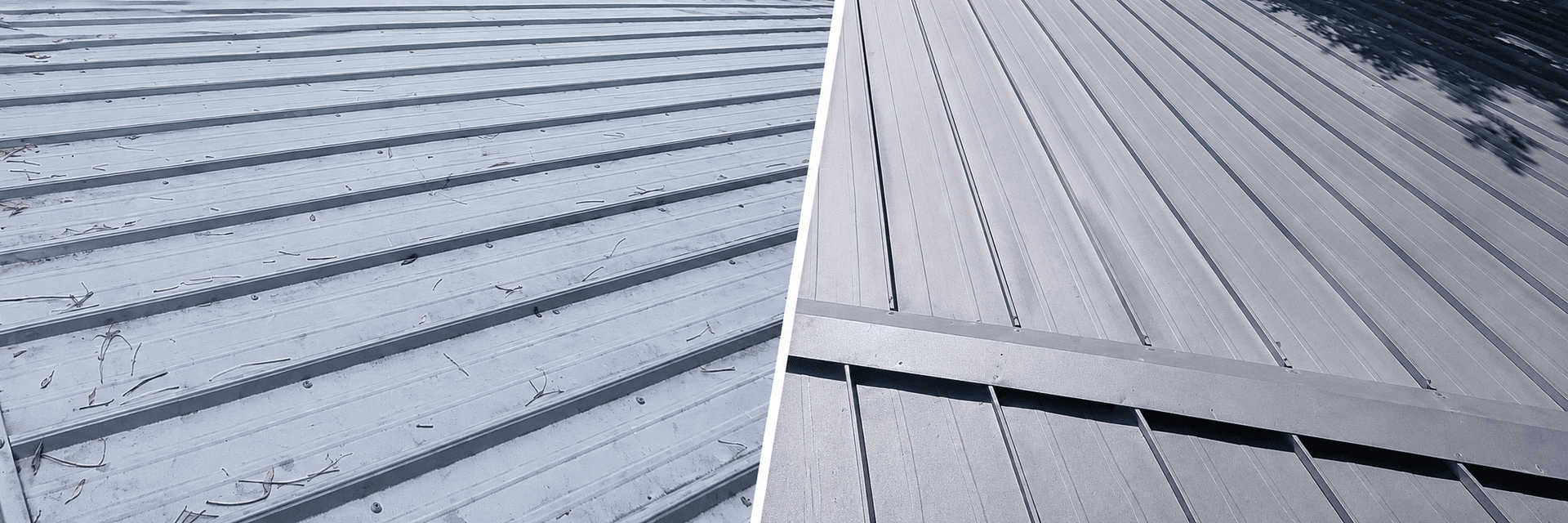
Metal roofing has become increasingly popular in South Florida over the last decade, and for good reason. Panels are typically aluminum or steel, coated to resist corrosion from our salt air, and installed in long interlocking sheets or standing seams. Metal roofs handle wind uplift exceptionally well when properly fastened, they're highly resistant to fire, and they can last 40-50 years or more with minimal maintenance. The tradeoff is upfront cost — metal is one of the pricier options — and improper installation (missing clips, poor fastening patterns) is one of the most common defects that could occur.
Concrete and Clay Tile
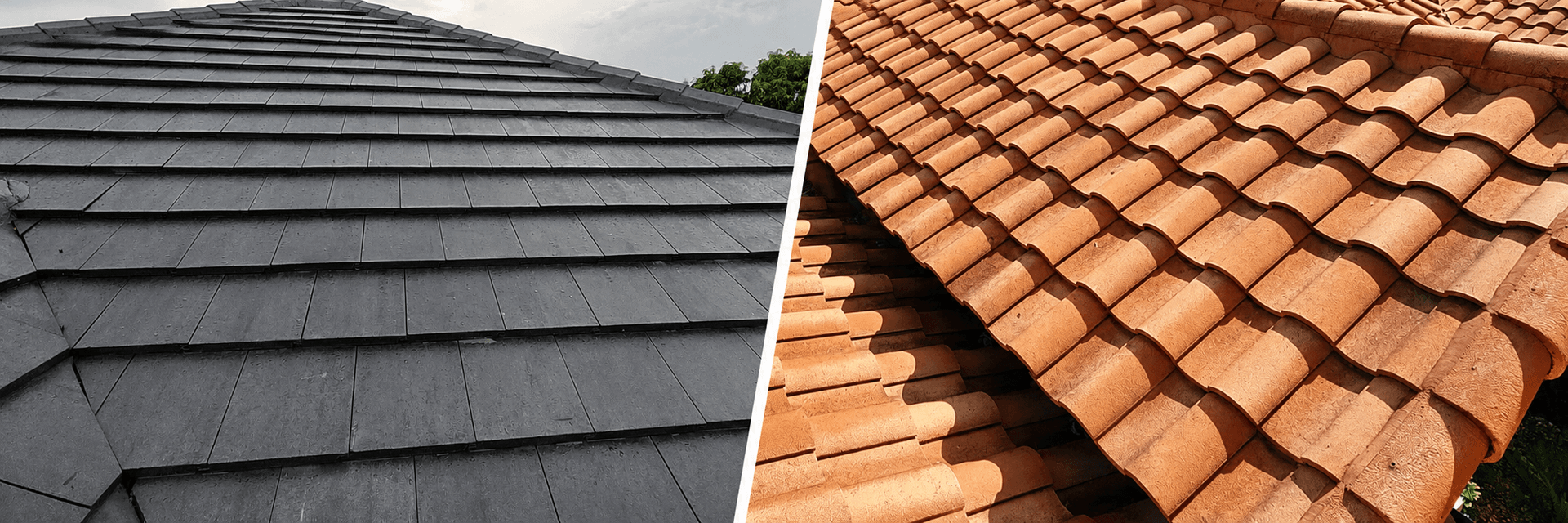
Tile roofs are a classic South Florida look, whether it's the flat profile concrete tile common on newer homes or the curved barrel clay tile seen on older Mediterranean-style houses. Both materials are extremely durable against UV exposure and hold up well structurally for decades. The real vulnerability isn't the tile itself — it's the underlayment beneath it and the fasteners or adhesive holding tiles in place. Cracked tiles, slipped tiles, and worn underlayment are the most frequent issues we find, and because tile is heavy, it also adds structural load considerations that don't apply to lighter materials.
Shingles: 3-Tab and Architectural
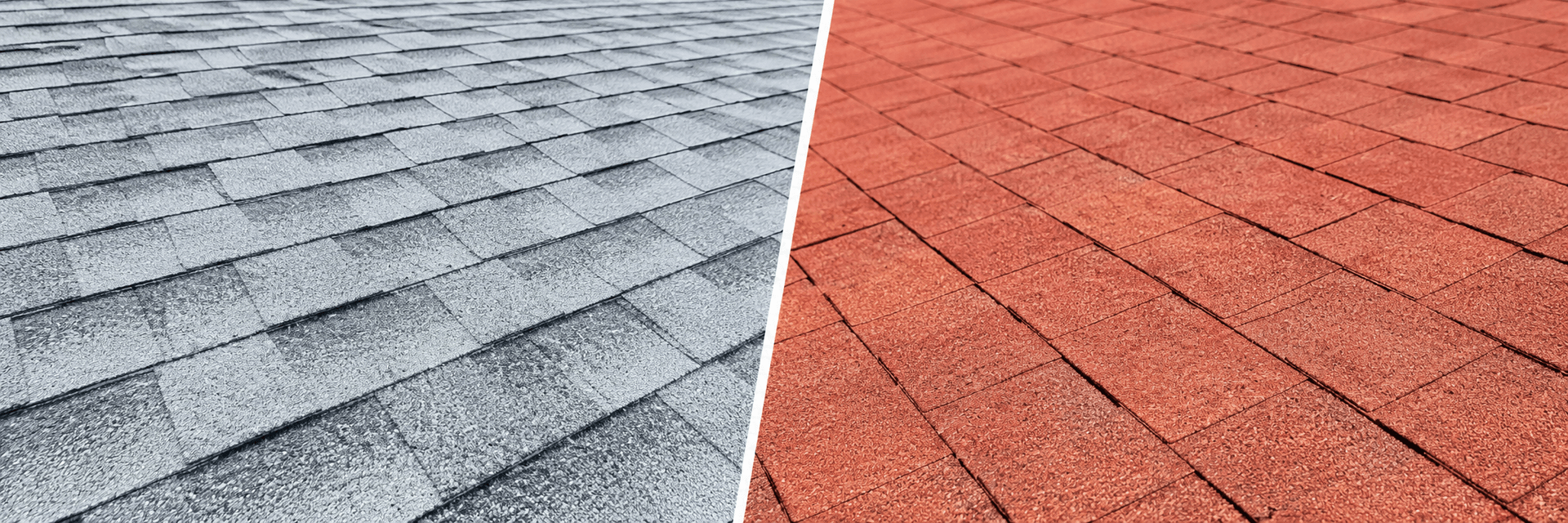
Asphalt shingles remain the most common roofing material in South Florida, largely because of cost and ease of installation. Three-tab shingles are the older, flatter, budget-friendly style, while architectural (or dimensional) shingles are thicker, layered, and built with a higher wind rating — most manufacturers now rate architectural shingles for 130 mph winds or more, which matters a lot here. Shingle roofs typically last 15-20 years in our climate, though intense sun exposure and humidity tend to shorten that lifespan compared to cooler regions. Granule loss, curling, and cracked seals are the usual signs of aging we look for.
Modified Bitumen
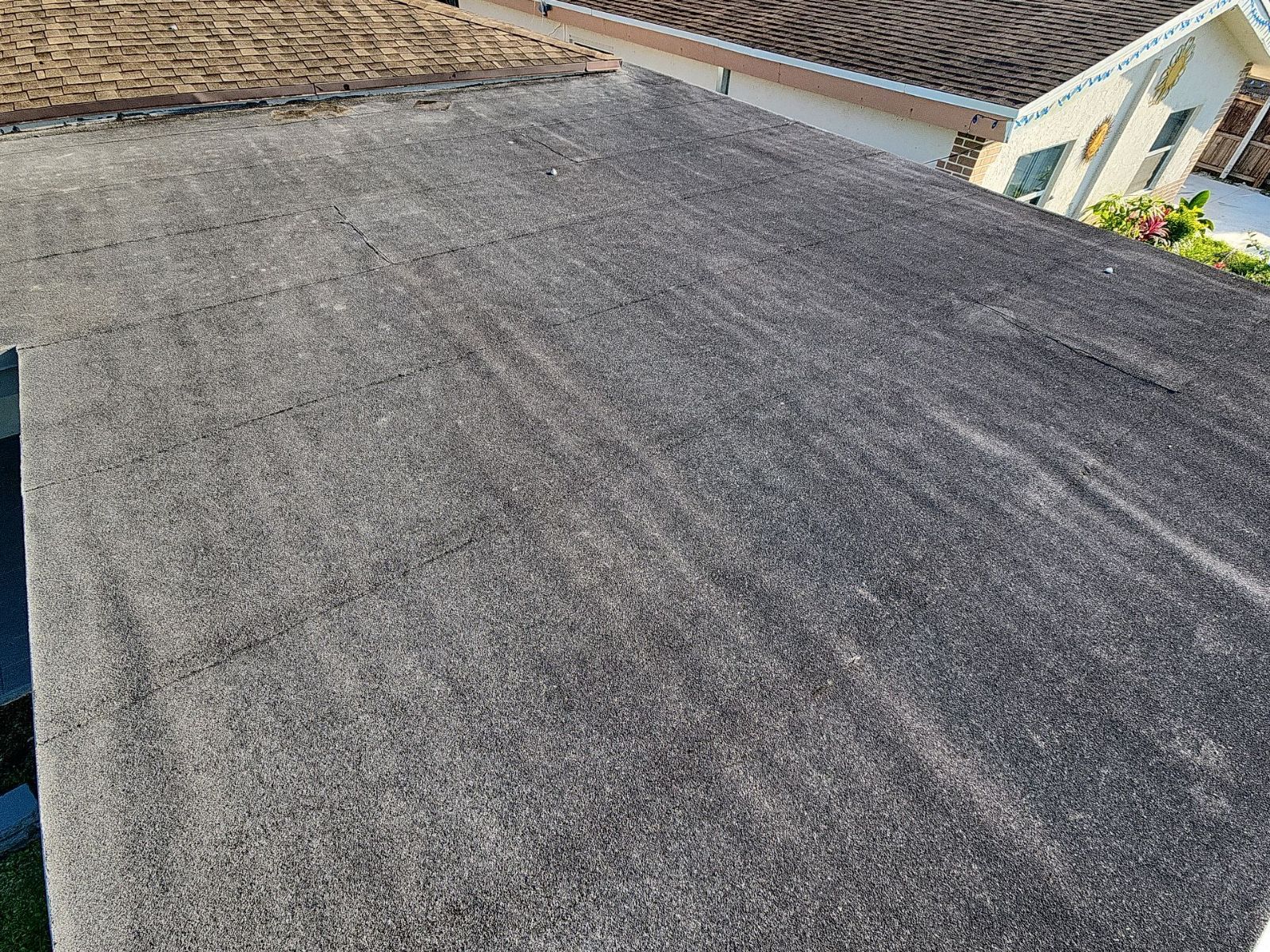
Modified bitumen is most often found on flat or low-slope roofs — think additions, porches, or older homes with flat sections. It's an asphalt-based membrane reinforced with modifiers that improve flexibility and weather resistance, applied in rolled sheets and either torched down, adhered, or mechanically fastened. It's a solid, cost-effective option for low-slope applications where traditional shingles or tile aren't practical, but seams and flashing details are critical — most leaks on these roofs originate at a poorly sealed seam or transition point rather than the field of the material itself.
How They Compare
When you put these materials side by side, the tradeoffs come down to lifespan, cost, weight, and wind performance:
Lifespan: Metal and tile lead the pack, often lasting 40+ years, while shingles typically need replacement every 15-20 years in South Florida's climate. Modified bitumen falls in the middle, generally good for 15-20 years depending on installation quality.
Cost: Shingles are the most budget-friendly upfront, followed by modified bitumen for flat sections, then tile, with metal generally being the most expensive per square foot.
Weight: Tile is by far the heaviest material and requires the structure to be engineered for it, while metal and shingles are comparatively lightweight.
Wind performance: Properly installed metal and architectural shingles tend to perform best in wind events, which is a major factor in wind mitigation inspections and insurance premiums. Tile can perform well too, but is more prone to individual tiles lifting or cracking under debris impact.
Maintenance and common issues: Every material has its own weak point — fastening issues with metal, underlayment and cracked tiles with concrete/clay, granule loss and worn seals with shingles, and seam failures with modified bitumen.
At the end of the day, the "best" roofing material really depends on your home's structure, your budget, and how long you plan to stay in the house. But no matter which material is on your roof, proper installation and regular inspections are what actually determine how well it holds up here in South Florida.